Most Goals in Champions League Finals by a Player
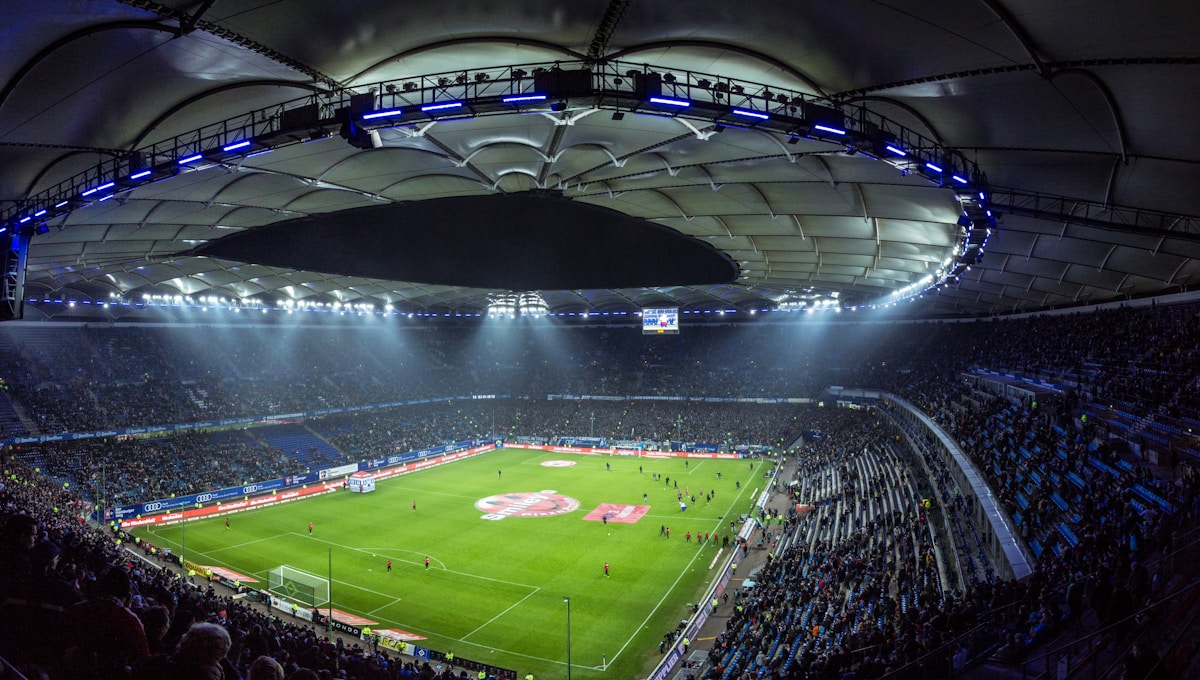
- Primary Signal: Most Goals in Champions League Finals by a Player
- Overview: Alfredo Di Stefano and Ferenc Puskas share the record with seven goals each in European Cup finals. Here is how the final-scoring charts look, from the 1950s to the modern era....
- Verification: Analyzed and compiled by Soccer2026 Global editorial monitoring desk.
The record for most goals in European Cup and Champions League finals is shared by two Real Madrid legends of the 1950s and early 1960s: Alfredo Di Stefano and Ferenc Puskas, with seven goals each. Di Stefano spread his across five consecutive finals from 1956 to 1960, scoring in every one. Puskas reached the same total in just two matches, which tells you everything about how devastating he was on the biggest stage.
Puskas remains the only player to score four goals in a single European Cup final, his haul in the famous 7-3 win over Eintracht Frankfurt at Hampden Park in 1960. He added a hat-trick in the 1962 final against Benfica, though Madrid lost that match 5-3. No player has scored a hat-trick in two separate finals since, and his four-goal final performance still stands alone. Di Stefano's five consecutive finals is a record that will almost certainly never be broken, since reaching five straight European finals requires a dominance that modern football's competitive balance makes nearly impossible. His consistency across those finals, scoring in each one, is what separates him from players who scored heavily in a single showpiece.
Di Stefano's achievement was consistency rather than explosion. He scored in five straight finals, a run that built Real Madrid's early European mystique and has never been repeated. His hat-trick in the 1960 final complemented Puskas's four goals, and together the pair scored seven of Madrid's goals in the highest-scoring final in history.
In the modern Champions League era, Cristiano Ronaldo leads with four final goals across three finals: a header for Manchester United against Chelsea in 2008, a late penalty for Real Madrid against Atletico Madrid in 2014, and two goals against Juventus in 2017. He is the only player in the modern era to score in three different finals, which matches his reputation as the competition's great big-game player. Ronaldo's four modern-era final goals came for two different clubs, which is itself unusual, since most repeat final scorers stay with one team throughout their peak years. His 2017 brace against Juventus is often cited as the finest individual final performance of the modern era, since it turned a tight match into a comfortable win.
Lionel Messi scored in two finals, both against Manchester United, in 2009 and 2011, while Gareth Bale, Mario Mandzukic, and Vinicius Junior are among the players who have scored decisive goals in more than one final. The modern era has fewer repeat final scorers because reaching multiple finals is harder in a more competitive, more globalised competition.
Gerd Muller deserves a mention for his three final goals for Bayern Munich in the 1970s, including two in the 1974 final replay against Atletico Madrid and the winner against Leeds United in 1975. His record shows that final scoring is not only about forwards from Madrid: the great Bayern sides of that era also produced a ruthless big-game scorer. Muller's final goals are sometimes overlooked because Bayern's 1970s side is remembered more for its domestic dominance, but his strikes in consecutive finals were decisive in building the club's European reputation. His record also shows that final scoring is not confined to one era or one club, since great strikers from every generation have delivered on the biggest night.
What makes final goals special is the pressure. A player can score freely in the group stage and freeze in a final, or score rarely all season and deliver when it matters most. The final-scoring charts therefore reward a different quality from the all-time list: not longevity or volume, but nerve and timing on a single night.
For fans debating greatness, final goals are a useful tiebreaker. All-time totals show who scored most often; final goals show who scored when everything was at stake. Di Stefano and Puskas set a standard in the 1950s that no modern player has come close to matching, and that is part of why their names still head this particular list.
📖 Continue Reading the Full Story
Continue reading this article on Soccer2026 Global.
⚡ Access Full Content NowMore from Soccer2026 Global



 ⚽ Football2026 Live
Over Under 2.5 Goals Betting in Football: A Beginner's Strategy Guide
Over/under 2.5 goals is one of football's simplest markets: you only predict whether a match has three or more...
 🏏 RC11 Fantasy & Cricket
How to Spot Differential Picks in Dream11 Grand Leagues
Grand leagues are won by players the crowd ignores. Here is a practical framework for finding low-owned, high-...
⚽ SportsBet Insights Live
Comprehensive Guide: Calculadora de Parlay — Odds Combinadas e Prêmios (Day 1 Guide)
Everything you need to know about Calculadora de Parlay — Odds Combinadas e Prêmios on SportsBet Insights Live...
⚽ Global Football Odds
Comparative Review: Calculadora de Parlay — Odds Combinadas e Prêmios (Day 11 Guide)
Why our free online Calculadora de Parlay — Odds Combinadas e Prêmios on Global Football Odds. Discover essent...